















 ₹https://clinics.dhiindia.com/dhi%C2%AE/-in-bengaluru/-in-mahadevapura/dhi-india-best-hair-transplant-in-mahadevapura-bengaluru--21Qk1z/articles/how-many-grafts-do-you-need-for-a-hair-transplant-a-complete-guide--0f25d42c-91c2-4559-878a-8e655a2bfdae
DHI® India - Best Hair Transplant, Mahadevapura, bengaluru
Hair Clinics in Mahadevapura, Bengaluru, Karnataka
No 4E, Third Floor, 122 Optima, Maheswari Nagar, Whitefield Road, Puttappa Industrial Estate Main Road, Nearby Singanapalya Metro Station, Mahadevapura, bengaluru, karnataka - 560048
Request A Call Back
DHI® India - Best Hair Transplant Social Feeds in Mahadevapura, bengaluru
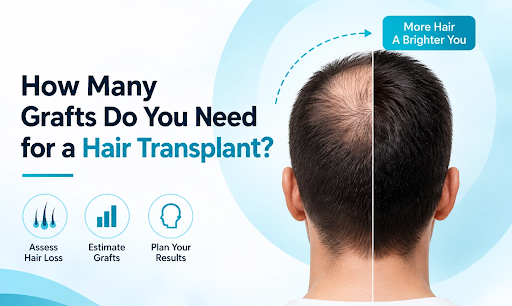
How Many Grafts Do You Need for a Hair Transplant? A Complete Guide
If you are researching hair restoration, how many grafts do I need for a hair transplant is usually the first question that comes up right after, will this actually work for me? The honest answer is that it depends on your hair loss pattern, donor supply, and the look you want. Here’s how surgeons arrive at an estimated graft count.
What Is a Hair Graft?
A hair graft is a small piece of tissue containing a natural grouping of 1 to 4 hair follicles that is moved from a donor area to a thinning or bald spot during a hair transplant surgery.
Factors That Decide Your Graft Count
Graft requirements differ from person to person. A surgeon looks at several factors:
Extent and pattern of hair loss: A receding hairline needs far fewer grafts than advanced diffuse thinning.
Donor area health and density: A thicker, healthier donor zone allows more grafts to be safely harvested.
Hair characteristics: Coarser or curlier hair covers the scalp better, so it often needs fewer grafts for the same visual density.
Personal density goals: A subtle, natural fill uses fewer grafts than a thick, maximum-density result.
Average Number of Grafts for Hair Transplant Calculated by Norwood Stage
Different regions of the scalp need different densities to look natural, and male pattern baldness is commonly measured using the Norwood Scale. It can help give you an initial idea of the average number of grafts for a hair transplant you may need. It can also give you a rough starting point for understanding how many grafts for a hair transplant may be needed before a formal consultation.
Average Grafts Needed by Norwood Stage
These figures are estimates and should not be treated as a final treatment recommendation. DHI India’s own graft calculator similarly provides an approximate range, with the final graft count confirmed after doctor consultation and donor-area assessment.
How the Hair Transplant Grafts Calculator Works
A hair transplant grafts calculator can give you a quick estimate of how many grafts you need based on your hair loss. However, it cannot replace a consultation or a surgeon’s assessment of your donor area and desired coverage.
DHI India has its own hair transplant graft calculator to help candidates understand the extent of their hair loss, plan for expected costs, and get a starting graft estimate before visiting a clinic. The calculator allows users to select their hair loss type, enter basic details and identify areas affected by hair loss.
1. Select your hair loss type: Male pattern hair loss, female pattern hair loss, or eyebrow reconstruction.
2. Enter basic details: Age and ethnicity, which can provide context for individual follicle characteristics and hair density expectations.
3. Mark your areas of hair loss: The calculator uses the selected areas to provide an estimated graft requirement.
Based on these inputs, the tool returns an estimated graft range and a rough cost estimate, giving you a starting point for understanding how many grafts you are likely to need for a hair transplant.
You can use the [DHI India Hair Graft Calculator] to get an initial estimate.
Why the Final Number Still Needs a Doctor’s Assessment
A hair transplant grafts calculator can only work from the information you provide, not everything your scalp can actually support. Two important factors it cannot fully assess through an online estimate are:
Donor area supply: The availability, health and density of the donor area need to be assessed as part of treatment planning.
Miniaturisation patterns: Hair that is thinning but not yet fully lost can affect how the treatment plan needs to be designed.
This is why the average number of grafts for hair transplant shown by any calculator is a range, not a final result. Surgeon expertise, the treatment technique used, and the extent of hair loss all factor into the graft count and the eventual cost per graft.
The real answer to how many grafts are needed for a hair transplant in your case can only be confirmed after a doctor examines your donor area and assesses your hair loss.
At DHI India, this step happens through a dedicated consultation before your treatment plan is finalised. DHI states that its doctors assess the affected area, understand the patient's requirements and determine the approximate number of grafts required as part of treatment planning.
Why Choose DHI India for Hair Transplant?
Graft count only tells half the story. How each graft is placed also determines how that number contributes to visible density. The DHI Technique focuses on direct implantation, with control over the angle, depth and direction of each graft through the DHI implanter.
DHI has been active in hair restoration since 1970 and states that its procedures are performed by physicians trained and certified through the DHI Hair Restoration Academy of London. DHI also states that its protocols are accredited with UK CQC and ISO.
DHI India also reports a 97% graft survival rate on its official website and states that hair transplant procedures are performed by trained, certified surgeons.
A [consultation with DHI India] is the most reliable way to convert an estimated graft range into a confirmed treatment plan.
FAQs
How many grafts are usually needed for a hair transplant?
The number varies depending on the extent and pattern of hair loss, donor area, hair characteristics and desired density. For example, the estimated ranges by Norwood stage in this guide range from around 500 grafts for some early-stage areas to more than 4,000 grafts for broader coverage.
Is 2,000 grafts enough for a hair transplant?
It depends on the area being treated and the extent of hair loss. Two people may require different graft counts because their donor density, hair characteristics and coverage goals can differ.
How can I calculate how many grafts I need?
An online hair transplant graft calculator can provide an initial estimate based on your hair loss pattern and selected treatment areas. DHI India’s calculator provides an approximate graft range, but the final number should be confirmed after doctor consultation and donor-area assessment.
Does the Norwood Scale determine the exact number of grafts required?
No. The Norwood Scale can help indicate the pattern and extent of male pattern hair loss, but it does not determine an exact graft count. Donor area, hair characteristics, treatment area and individual density goals also influence the requirement.
Can a consultation change the estimated graft count?
Yes. An online calculator provides an estimate, while a doctor can assess the donor area and other factors that cannot be accurately evaluated through an online tool. This assessment helps determine a more appropriate treatment plan.
Want to know how many grafts you may need? Use the DHI India Hair Graft Calculator for an initial estimate, then book a consultation with a DHI India doctor to discuss your individual hair loss pattern and treatment plan. If you are looking for a hair transplant clinic in Mahadevapura, bengaluru, a consultation can help you understand your specific graft requirement.