






 ₹https://clinics.dhiindia.com/dhi%C2%AE/-in-chennai/-in-t-nagar/dhi-india-best-hair-transplant-in-t-nagar-chennai--7GGz9x/articles/are-synthetic-hair-transplants-safe-the-real-science-behind-artificial-hair--fc4788ae-6e83-4fb7-83f8-a13775f5dc8d
DHI® India - Best Hair Transplant, T Nagar, chennai
Hair Clinics in T Nagar, Chennai, Tamil Nadu
No 73/74, Fourth Floor, Above Max Fashion, Gopathy Narayana Chetty Road, Opposite Starbucks, T Nagar, chennai, tamil nadu - 600017
Request A Call Back
DHI® India - Best Hair Transplant Social Feeds in T Nagar, chennai
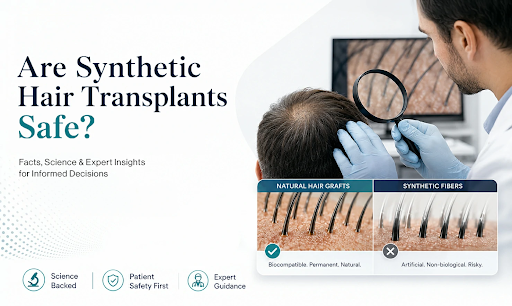
Are Synthetic Hair Transplants Safe? The Real Science Behind Artificial Hair
Hair loss can quickly wear down confidence, and that urgency has fueled a market for instant fixes. Among the options surfacing online is the synthetic hair transplant, a procedure that promises full density in one sitting without waiting months for natural growth.
Part of the appeal is the perceived lower cost of synthetic hair transplants, often marketed as lower than that of a full procedure because no donor extraction is required. However, synthetic hair transplants are not comparable to FUE and DHI as an equivalent natural hair restoration approach. Before considering this route, it helps to understand what it involves, why regulators moved against certain prosthetic hair fibres, what safety concerns exist, and what alternatives are available today.
What Is a Synthetic Hair Transplant?
A synthetic hair transplant, also called artificial hair implantation, involves implanting manufactured polymer-based fibres into the scalp to imitate the look of natural hair. Since no donor follicles or living tissue are used, the fibres are placed directly into the scalp. Because the fibres do not grow, their length and style are fixed at the time of implantation.
People who seek this procedure usually want instant visible results. This can include those with advanced baldness who have limited donor hair available for a traditional transplant, people who want to avoid a longer hair-growth timeline and individuals drawn in by marketing that presents synthetic hair as a permanent or low-maintenance solution.
However, synthetic fibres do not behave like natural hair follicles. DHI's own material notes that synthetic hair requires periodic top-ups because implanted fibres can shed, while also highlighting concerns around infection, allergic reactions and scalp irritation.
Potential Risks and Complications
One of the main concerns with synthetic hair is that the implanted fibres are artificial materials rather than living hair follicles. The body's response to these foreign materials can result in complications such as infection, allergic reactions and scalp irritation. DHI's published material also highlights the possibility of longer-term scalp sensitivity.
The FDA similarly states that prosthetic hair fibres presented risks of serious infections, illness and injuries associated with implantation. The FDA's medical device ban records show that prosthetic hair fibres were banned in the United States effective June 3, 1983.
Because synthetic fibres are non-living, they do not grow like natural hair follicles. Their appearance can therefore change as fibres shed or require replacement. This is an important consideration when evaluating synthetic hair transplant results and before-and-after images.
The immediate visual density may be one of the main attractions of synthetic hair implantation, but understanding the potential need for maintenance and the possibility of complications is equally important.
Why Synthetic Hair Fibers Were Banned in the United States
In 1983, the U.S. Food and Drug Administration banned prosthetic hair fibres for scalp implantation. The FDA states that this was only the second medical device ban it had issued at that time. According to the FDA, the device presented substantial deception and an unreasonable and substantial risk of illness or injury that could not be adequately addressed through labelling.
The FDA specifically states that prosthetic hair fibres did not stimulate hair growth and could cause serious infections, illness and injuries from implantation.
This regulatory history is an important part of understanding synthetic hair transplant safety before considering artificial hair implantation.
Synthetic Hair vs Natural Hair Transplant
The difference largely comes down to the biological nature of the material being implanted. Here is how the two approaches compare:
The exact risks and suitability of any hair restoration procedure depend on the individual and should be assessed by a qualified doctor.
Are There Better Alternatives to Synthetic Hair?
Several established approaches to hair restoration are available, depending on the individual's hair loss pattern, donor area and treatment requirements.
DHI hair transplant uses a specialised implanter tool to place individual living follicles directly into the scalp. DHI India states that its patented DHI Implanter allows the doctor to control the angle, direction and depth of follicle placement.
FUE (Follicular Unit Extraction) involves extracting individual hair follicles from a donor area and implanting those follicles into areas affected by hair loss.
PRP (platelet-rich plasma) therapy uses concentrated platelets from the patient's own blood as part of a hair-loss treatment approach. Suitability and results can vary between individuals.
Combination treatments may combine hair restoration procedures with other treatments such as PRP, depending on the patient's condition and the doctor's recommendation.
A synthetic hair transplant may seem like a quick solution because it can provide an immediate visual change, but artificial fibres do not grow like natural hair. They can also require ongoing maintenance and may be associated with foreign-body reactions and other complications.
At DHI India, the DHI technique uses healthy hair follicles and a patented implanter for direct placement into the recipient area. DHI India states that the procedure is performed by physicians trained and certified through the DHI Hair Restoration Academy of London and follows DHI quality protocols.
DHI India also publishes a detailed safety protocol covering medical screening, local anaesthesia administered by trained doctors, risk management, emergency preparedness, single-use disposable instruments, follicle care and post-procedure follow-up.
Every treatment begins with an assessment of the patient's hair loss and requirements so that the doctor can determine whether hair transplantation is appropriate and discuss available options.
If you are exploring natural hair transplant options in India, you can consult DHI India to discuss your individual requirements.
FAQs
Is a synthetic hair transplant safe?
Synthetic hair implantation has potential risks because the implanted fibres are artificial materials. Reported concerns include infection, allergic reactions and scalp irritation. The FDA banned prosthetic hair fibres in the United States in 1983 after determining that they posed substantial risks of illness or injury.
How long do synthetic hair transplant results last?
Synthetic fibres do not grow or regenerate like natural hair. They can also shed or break over time, meaning periodic replacement or top-ups may be required. DHI's published material specifically notes the need for periodic top-ups because synthetic fibres can shed.
If someone has already had a synthetic hair transplant, can DHI still help?
A DHI clinic can assess the scalp and existing hair to determine whether hair restoration may be appropriate. The available options will depend on the individual's scalp condition, donor hair availability and any effects from a previous procedure. A personalised consultation is the appropriate starting point. DHI India states that its consultation process includes assessment of the scalp, hair loss and treatment options.
What is the recovery time after a synthetic hair transplant compared with FUE or DHI?
Recovery depends on the procedure performed and the individual. Synthetic implantation does not involve harvesting a donor area, but this does not mean it is free from risks or complications. FUE and DHI are surgical hair restoration procedures and also involve a recovery period. A doctor can explain the expected recovery based on the specific treatment plan.
Is DHI the same as a synthetic hair transplant?
No. DHI is a natural hair transplantation technique that uses the patient's own healthy hair follicles. DHI India states that follicles are extracted from the donor area and implanted directly into the thinning or balding region using the patented DHI Implanter.
Considering your options for hair restoration? Book a consultation with DHI India to have your scalp and hair loss assessed and understand whether a natural hair transplant may be suitable for you. If you are looking for a hair transplant clinic in T Nagar, chennai, speak with a qualified DHI doctor about your individual requirements.