











 ₹https://clinics.dhiindia.com/dhi%C2%AE/-in-chennai/-in-t-nagar/dhi-india-best-hair-transplant-in-t-nagar-chennai--7GGz9x/articles/hair-transplant-growth-chart-a-month-by-month-results-timeline--ad4e4a2b-5162-4797-9abe-525f20f8409b
DHI® India - Best Hair Transplant, T Nagar, chennai
Hair Clinics in T Nagar, Chennai, Tamil Nadu
No 73/74, Fourth Floor, Above Max Fashion, Gopathy Narayana Chetty Road, Opposite Starbucks, T Nagar, chennai, tamil nadu - 600017
Request A Call Back
DHI® India - Best Hair Transplant Social Feeds in T Nagar, chennai
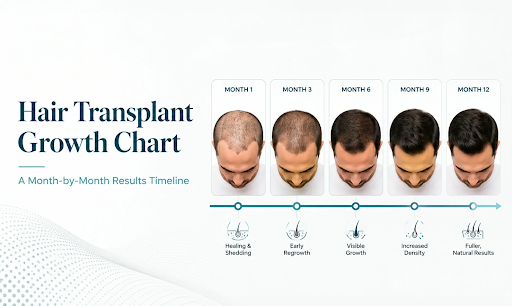
Hair Transplant Growth Chart: A Month-by-Month Results Timeline
A hair transplant is a long-term approach to hair restoration, but visible results do not appear immediately after the procedure. Transplanted hair follicles need time to heal, settle into their new environment and begin producing new hair growth.
Following a hair transplant growth chart can help you understand what to expect during each stage of recovery and maintain realistic expectations about your hair transplant results.
Breaking Down the Hair Transplant Growth Timeline
The hair transplant growth timeline follows a gradual process that can include healing, temporary shedding, a resting phase, new hair production and gradual thickening. Each stage plays an important role in the overall development of your results.
The hair transplant recovery timeline generally includes the following stages:
Initial healing phase
During this stage, the scalp recovers as the transplanted grafts settle into their new positions.Temporary shedding phase
Transplanted hair may shed during the early months while the follicles remain in place beneath the scalp. This can be a normal part of the process.Quiet or resting phase
The transplanted follicles go through a resting period, so little or no visible growth may occur.New growth phase
Fresh hair begins to appear gradually as transplanted follicles enter the growth cycle.Maturation phase
The new hair gradually becomes stronger, thicker and more natural in appearance.
Your Hair Growth Journey Through the Months
Month 1: Healing and Initial Recovery Phase
During the first month, your scalp focuses on recovery. You may notice redness, mild swelling, small scabs or sensitivity around the treated areas. These effects generally reduce as the scalp heals.
During this period, the transplanted grafts begin adapting to their new location. Temporary shedding of transplanted hair can also occur and does not necessarily indicate transplant failure. DHI India notes that shedding during the early stages can be a normal part of the post-transplant process.
Following the post-procedure instructions provided by your doctor is important during this stage.
Months 2 to 3: Resting Phase Before New Growth
The second and third months are usually a slower stage in the hair transplant growth timeline. While there may be limited visible change, transplanted follicles continue through their natural growth cycle.
Hair shedding may continue during this period before new growth becomes noticeable. This can make the scalp appear similar to how it looked shortly after the procedure, so patience is important.
The quality of graft handling, implantation and post-treatment care can all contribute to the development of your eventual results.
Months 4 to 6: Early Hair Growth Becomes Visible
The hair transplant results timeline becomes more noticeable during this period. New hair growth may begin around the third or fourth month, with more visible improvement developing over the following months.
Early hairs may appear thin, fine or uneven as the transplanted follicles gradually mature. Over time, new strands become stronger and begin improving overall coverage and density.
The implantation technique can also influence the appearance of the result. Precise control over the direction, angle and depth of graft placement can help create a natural-looking hair pattern. DHI states that its patented implanter is designed to provide this control during implantation.
Months 7 to 9: Improvement in Density and Natural Appearance
During this phase, you may notice further improvements in hair coverage and thickness. Newly grown hair gradually blends with the existing hair, creating a more balanced appearance.
As the transplanted hair matures, the positioning of individual grafts becomes increasingly important to the overall appearance. Proper placement can help support a natural-looking hairline and appropriate density.
Your individual growth rate can vary, so progress during this stage may differ from one person to another.
Months 10 to 12+: Mature Results and Long-Term Growth
By around the one-year mark, many patients can see significant improvements in hair thickness and overall appearance. DHI India notes that the final appearance of a hair transplant develops over several months, with further improvement possible beyond the first year.
The later stages of your hair transplant month-by-month results journey can show improvements in hair texture, thickness and how the transplanted hair blends with the surrounding growth.
Some patients may continue to notice gradual changes beyond 12 months, depending on their individual growth and healing pattern.
Factors That Influence Your Hair Transplant Recovery and Results
Every patient’s recovery journey is different. Several factors can influence how quickly you see visible results and how the transplanted hair develops.
Quality and health of extracted grafts
Implantation method and technique
Surgeon expertise and precision
Graft handling and time outside the body
Post-treatment care
Individual healing and hair growth cycle
Graft handling is particularly important because factors such as storage conditions, oxygen exposure, preservation solution and the time between extraction and implantation can influence graft survival.
Following your surgeon’s post-procedure instructions and attending recommended follow-ups can also help support the recovery process.
Why Choose DHI for Your Hair Transplant?
DHI India uses its patented DHI Technique for direct hair implantation. The technique allows DHI doctors to control the depth, direction and angle of graft placement using a specialised DHI implanter.
DHI states that its procedures are performed by trained and certified physicians and follow established quality and safety protocols. Its current website reports graft viability of more than 90%, while its safety protocol page reports results ranging from 97% to 99% graft survival. These figures are DHI-reported results and should not be interpreted as a guaranteed outcome for every individual.
DHI also highlights the use of single-use instruments and protocols designed to support careful graft handling and implantation.
Choosing a clinic with experienced surgeons, appropriate medical protocols and a suitable hair restoration technique can help you better understand your hair transplant recovery timeline and treatment expectations.
If you are considering hair restoration, schedule a consultation with DHI to discuss your hair loss concerns and understand which treatment approach may be suitable for you.
FAQ: Frequently Asked Questions
1. When can I expect to see results after a hair transplant?
Ans. Early signs of new hair growth may appear around the third or fourth month, while more noticeable improvement can develop from around the sixth month onward. Results continue to mature over the following months.
2. What does a hair transplant growth chart show?
Ans. A hair transplant growth chart outlines the typical stages following a procedure, including initial healing, temporary shedding, the resting phase, early hair growth and gradual improvement in density over the following months.
3. When will my final hair transplant results be visible?
Ans. Hair transplant results develop gradually rather than appearing at a single point in time. Significant improvement may be visible around the one-year mark, although some patients can continue to see changes beyond 12 months.
4. How do DHI hair transplant results develop month by month?
Ans. DHI hair transplant results develop gradually as transplanted follicles move through their natural growth cycle. Early growth may appear fine or uneven before the hair becomes thicker and blends more naturally with the surrounding hair.
5. How long does it take to recover after an FUE hair transplant?
Ans. The FUE recovery timeline varies from person to person. Initial scalp healing generally takes place during the first few weeks, while the growth and maturation of transplanted hair take several months. Your surgeon can provide personalised aftercare instructions based on your procedure and recovery.
Visit a our hair transplant clinic in T Nagar, chennai to discuss your hair transplant goals and learn more about the procedure, recovery process and expected results. You can also schedule a consultation with DHI to take the next step towards your hair restoration journey.